Steam, Scale and Shelf Life: What a British Bathroom Really Does to Your Cosmetics
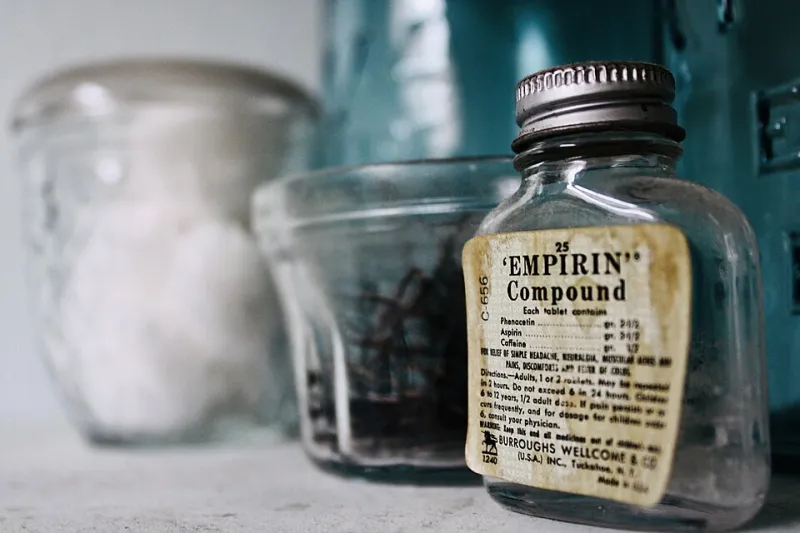
Photo: Chris Hawes, CC BY 2.0, via Wikimedia Commons
British bathrooms are rarely designed with formulation science in mind. A north-facing window that never opens, an extractor fan that clears perhaps a third of the steam it should, and a towel radiator that keeps the room at a steady 24°C for hours after a shower: it is a microclimate, and your cosmetics are living in it.
The consequences are rarely dramatic. Products do not usually spoil with a theatrical smell and a puff of mould. They degrade quietly — a cream that starts to feel grainier, a serum that turns the colour of weak tea, a mascara that stings where it previously did not. This is an audit of where that damage happens, and what is worth keeping.
The dampest room in the house
Water is the substrate for almost everything that goes wrong. Most creams, lotions, liquid foundations and mascaras are oil-in-water or water-in-oil emulsions, meaning they contain free water that micro-organisms would happily colonise. Manufacturers hold that risk back with a preservative system — typically phenoxyethanol, sodium benzoate or potassium sorbate, supported by chelators such as EDTA or phytic acid and held at an acidic pH.
Those systems are validated by challenge testing under controlled conditions, usually around 20–25°C with the packaging closed. A bathroom shelf at 28°C and 80% relative humidity is not that. Warmth accelerates hydrolysis and oxidation — as a rough rule of thumb, reaction rates climb steeply for every ten degrees — while repeated opening and closing introduces air, fingers and shower water.
Cheap plastic caps that no longer click, pump bottles stored on their side, and jars used with wet hands all shorten the odds. A jar is the worst offender: every scoop takes out preservative along with product and puts back whatever was on your fingertips.
The PAO symbol is not a warranty
The little open-jar icon with "6M" or "12M" beside it is a period-after-opening estimate, tested once, under lab conditions, on an unopened unit. It is not a promise that the product will behave identically in your bathroom, and it does not tell you when the product was manufactured — that is the batch code, which most UK brands will decode if you email them.
Treat the PAO as an outer boundary and let texture and smell do the rest of the work. A 12M cream kept in a hot, wet room may be past its useful life at month seven; a 6M serum kept in a dark bedroom drawer may comfortably exceed it.
Makeup: the fragile end of the shelf
Mascara is the least forgiving item in the bag. It is a water-based wax emulsion applied within millimetres of the ocular surface, and the wand reintroduces whatever it has picked up on every pass. Three months from opening is the working limit, not twelve; never add water, saliva or oil to loosen a drying tube, and never share it.
Cream blush, liquid bronzer and pot concealers are the next casualties. High water content, a wide mouth and constant finger contact make them prone to separation and to mould at the rim. Watch for a grainy texture, a thin oily ring or a colour that has shifted warmer.
Pressed powders are more robust but not immune: brushes transfer skin oils and biofilm onto the pan surface, and a powdery, hard-crusted top layer is a sign the surface has been compromised. Lip glosses with a doe-foot applicator should be replaced at around twelve months, and wooden or soft pencils benefit from sharpening to a fresh tip rather than wiping.
Actives and antioxidants pay the highest price
L-ascorbic acid is the classic British heartbreak. In an aqueous serum it oxidises to dehydroascorbic acid, which is why the liquid darkens from pale straw to amber to brown. A lightly golden serum is usually still doing useful work; one the colour of strong tea is not. Anhydrous and encapsulated formats resist this better, but heat still pushes them along.
Retinol is degraded by light, heat and oxygen, and a bathroom windowsill is close to worst-case. AHAs and BHAs are comparatively stable, but water loss through a badly sealed cap will concentrate them, and a sudden sting is a warning rather than a rite of passage.
Sunscreen: the emulsion that will not forgive
Modern UV filters are dispersed in carefully built emulsions, and those emulsions are sensitive. Avobenzone can be destabilised by trace metals, which is one reason rusting bathroom shelving is a genuine problem rather than an aesthetic one. Cold nights on a windowsill can cause crystalline changes; heat can cause separation. If a sunscreen has split, weeps or leaves a gritty film, it is not protecting you at the stated factor.
Never decant sunscreen into a smaller travel bottle and leave it there for months. The formula was validated in its original packaging, with its original preservative load and headspace.
From 'still fine' to 'bin it'
The honest signs, in rough order of seriousness:
- Smell change — sour, plasticky, rancid or simply 'not what it was'. Bin.
- Texture change — splitting, weeping, graininess, pilling that was not there before. Bin.
- Colour shift in a serum or cream, particularly browning in a vitamin C. Bin if pronounced.
- Packaging behaviour — a swollen tube, a pump that has started to spit, a cap that no longer seals. Bin.
- New stinging or itching in a product you previously tolerated. Stop, patch test, do not push through.
The room-by-room audit
Shower caddy. Everything here is in the splash zone. Keep only what you use wet and rinse the bottles weekly. Nothing expensive should live here permanently.
Sink ledge. The worst of both worlds: steam above, warm pipes below. Move anything with vitamin C, retinol or an SPF rating.
Under-sink cupboard. Deceptively cool-looking. The U-bend radiates warmth and leaks humidity. Backups and unopened products belong elsewhere.
Windowsill. Ultraviolet light plus temperature swings. This is where antioxidants go to die.
Bedroom drawer or dressing table. The correct home for serums, actives and anything you have spent more than £30 on.
Storage fixes that earn their space
A closed cabinet beats an open shelf; a lidded storage box with a sachet of silica gel beats both. Wipe caps and nozzles with a clean tissue weekly, close everything before the shower goes on, and never store brushes in an open pot beside the loo. If you keep a mini fridge for vitamin C, let products come to room temperature before use to avoid condensation inside the bottle.
Finally, an audit is also an opportunity to use the recycling infrastructure we now have: the Recycle at Boots scheme and similar in-store drop-offs accept empties including caps and pumps, and most UK councils take the outer cartons. Clear the shelf, and the shelf stays cleaner.