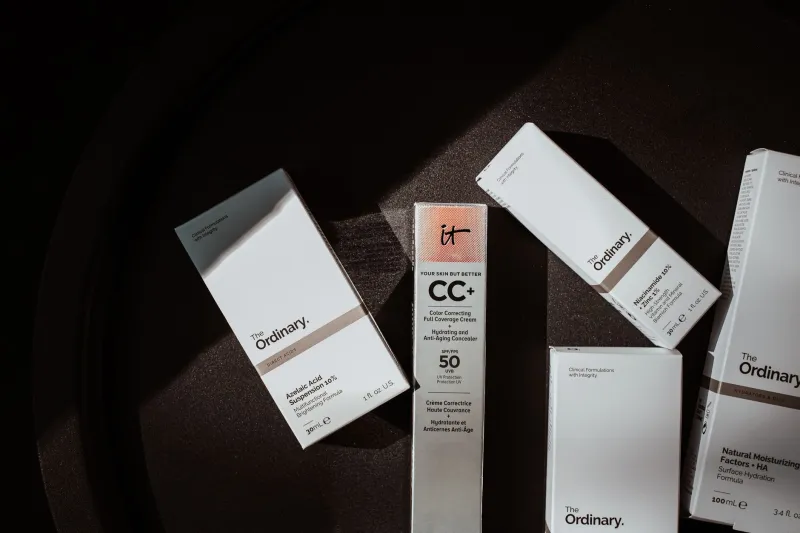
The Streamlined Serum Wardrobe: Rethinking Actives for UK Skin in 2026
Serums were once the status symbol of a serious skincare routine. The more glass droppers on the shelf, the more committed the consumer appeared. In 2026, that logic is being quietly dismantled. The UK market is moving away from the maximalist serum wardrobe—not because actives have lost their value, but because too many of them have been asked to do too much at once. The reset is less a rejection of science than a demand for better evidence, better sequencing and fewer redundant steps.
The Layering Hangover
The past decade of beauty content trained a generation to layer. An acid toner, a vitamin C serum, a niacinamide serum, a hydrating serum, a retinoid and a barrier cream could all be presented as a sensible evening routine. In practice, that approach often produced irritation, confusion and a shelf full of half-used bottles. The UK consumer has become more sceptical. Ingredient lists are read more closely, dermatologists are followed more attentively, and the language of skin barrier health has moved from niche forums into mainstream retail.
This is not anti-active. It is anti-clutter. A streamlined serum wardrobe does not mean abandoning retinoids or antioxidants; it means choosing a small number of formulas that serve distinct purposes and can be used consistently without overwhelming the skin.
The Conflicts That Made Us Rethink
Many of the most common conflicts are not dramatic. They are cumulative. A retinoid used on the same evening as a strong exfoliating acid is a familiar route to dryness and sensitivity. A vitamin C serum followed by a high-strength benzoyl peroxide treatment can be unnecessarily irritating for some skin types. Copper peptides and strong acids may sit awkwardly in the same routine because of differing pH preferences. Even multiple exfoliating acids spread across a cleanser, toner and serum can add up to more resurfacing than the skin can comfortably tolerate.
Niacinamide is often cited as a peacemaker, and it is generally well tolerated alongside many ingredients. That does not make it a reason to stack five products. The more relevant question in 2026 is whether each step earns its place. If two serums deliver overlapping benefits, one is probably redundant.
What the UK Climate Actually Does to Skin
The British environment is not a neutral backdrop. Central heating from October onwards lowers indoor humidity and can leave skin feeling tight even when it does not look dry. Urban pollution adds oxidative stress, while wind and cold can disrupt the barrier during commuting and outdoor exercise. Hard water in some regions may contribute to dryness or sensitivity for certain people. None of these factors demands more actives. Most of them demand better barrier support and a more restrained approach.
This is why the minimalist serum argument has gained traction in the UK specifically. A routine designed for a humid climate or a highly controlled indoor environment may not translate well to a flat with radiators, a train commute and a February wind. The skin is dealing with enough input without a ten-step serum protocol.
The Single Actives Worth Keeping
A sensible serum wardrobe usually revolves around four functions: renewal, antioxidant protection, exfoliation and barrier support. A retinoid remains the most evidence-backed ingredient for fine lines and congestion, but it does not need to be used every night. A moderate-strength retinol or retinaldehyde used two or three evenings a week is often more sustainable than a high-strength formula applied nightly.
A morning antioxidant, such as a well-formulated vitamin C, helps address pollution and UV-related oxidative stress. An exfoliant—salicylic acid for congestion or a gentle alpha-hydroxy acid for texture—can be useful, but usually only once or twice a week alongside a retinoid. For redness and uneven tone, azelaic acid is a strong single-agent option. For barrier support, humectants such as glycerin and panthenol are unglamorous but effective. Niacinamide at a modest percentage can be helpful, but it is not essential if the rest of the routine is sound.
A Sensible 2026 Serum Framework
A workable pattern is simple. In the morning, cleanse gently, apply one antioxidant if needed, follow with moisturiser and sunscreen. In the evening, alternate rather than stack: a retinoid on some nights, an exfoliant on others, and a barrier-focused night in between. Introduce one new active at a time and allow at least four weeks before judging it. If the skin stings, flakes or feels tight, the routine is probably asking too much.
The goal is not a bare shelf. It is a shelf where every serum has a job. In 2026, the most sophisticated routine may be the one that looks slightly underwhelming—and works consistently through a British winter.
The Bottom Line
Fewer actives, better sequencing and a realistic view of UK skin stress is the reset worth making. The serum wardrobe of 2026 should be edited, not expanded.