The Tiny Pot Ledger: What 15ml of Eye Cream Really Buys in 2026
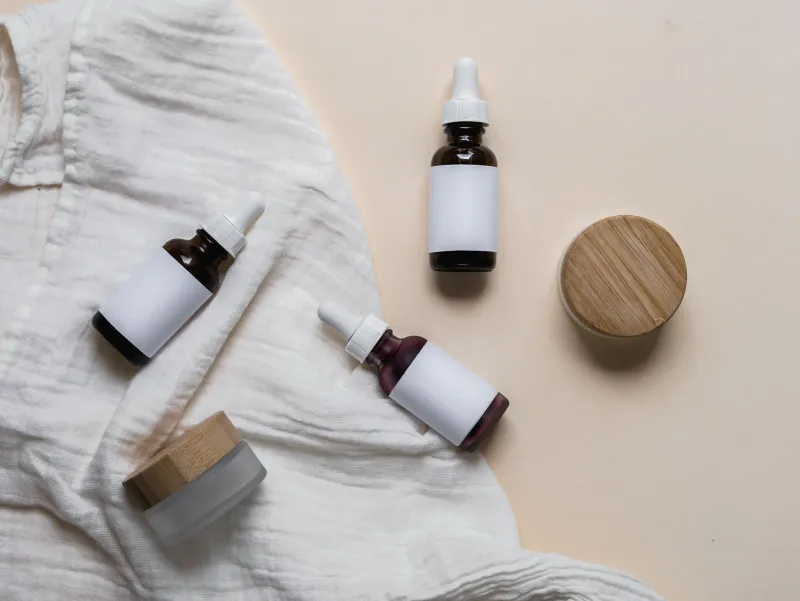
The eye cream is one of beauty’s most persistent small-format purchases. A standard 15ml pot sits in the palm like a paperweight, carries a price that would be unremarkable for a 50ml face cream, and promises to address puffiness, dark circles and fine lines in an area of skin that is thinner, more mobile and more easily irritated than the rest of the face. In 2026, with ingredient literacy higher than ever among UK shoppers, the category deserves a colder look. Not because eye creams are inherently unnecessary, but because the arithmetic of 15ml is rarely explained at the counter or on the product page.
This is not a rejection of the category. A well-formulated eye product can offer real cosmetic elegance: a lighter texture, a lower irritant load, an applicator that encourages gentle use, and a formulation tested for proximity to the eye. The question is whether the pot earns its place beside a face moisturiser that may contain many of the same ingredients at a comparable or lower cost per millilitre. The answer depends less on the word eye than on the ingredient list, the packaging and the job the product is actually doing.
The 15ml arithmetic
A 15ml eye cream priced at £25 works out at roughly £1.67 per millilitre. At £60, it is £4 per millilitre. A 50ml face moisturiser at £30 is £0.60 per millilitre; even a £50 face cream is £1 per millilitre. Some eye creams are therefore three to seven times more expensive per millilitre than a mid-market face cream, and the gap widens against high-street moisturisers. That premium may buy a more refined texture, a smaller batch, ophthalmological testing, an airless package or a patented delivery system. It does not automatically buy a stronger active.
Ingredient lists are ordered by concentration only down to 1%, and below that the order is not a reliable guide to efficacy. A 15ml pot can still contain a meaningful amount of caffeine or niacinamide, but the shopper cannot infer exact percentages from the back of the carton. This is why the useful comparison is not simply eye cream versus face cream, but formulation versus formulation: does the product contain the actives that match the concern, at a tolerable pH and in a package that protects them?
What the eye area actually needs
The skin around the eye is thin, repeatedly folded by blinking and expression, and close to the tear film. It is not a smaller version of the cheek. Barrier support, hydration and photoprotection matter here as much as anywhere else, and irritation is a real risk when strong actives are applied too close to the lash line. A dedicated eye cream can justify itself by being fragrance-free, low in volatile alcohols, tested for ocular tolerance and textured so that it does not migrate into the eyes.
That said, the category is not regulated as a separate class of cosmetic in the UK. Eye creams are cosmetics like any other, and claims such as reduces dark circles or visibly de-puffs must be substantiated. The word eye is a positioning choice, not a guarantee of superior formulation. A gentle face moisturiser can be suitable for the orbital area if it is well tolerated, though it may be too rich or too fragranced for some users.
Actives with plausible eye-area evidence
Caffeine is the category’s most familiar active. It can produce a temporary vasoconstrictive effect, which may make puffiness look less pronounced for a few hours. It is not a permanent fix, and the effect depends on concentration and formulation. A morning eye product with caffeine can be a reasonable cosmetic tool, but it should not be expected to restructure the area.
Peptides are abundant in eye creams because they are versatile and usually well tolerated. The evidence is mixed and highly dependent on the specific peptide, its concentration and its delivery. Some peptides support hydration and the appearance of fine lines; others are largely marketing names. A peptide-rich eye cream may be pleasant and useful, but it is not automatically more effective than a simple humectant-and-barrier formulation.
Niacinamide has a stronger general evidence base for barrier support, uneven tone and inflammation, and it is often used around the eye at 2–5%. Eye-specific trials are more modest, but the ingredient is plausible for mild pigmentary concerns and barrier care. It can sting some users, especially if the skin is compromised, so a patch test remains sensible.
Retinoids have the best evidence for photoageing and fine lines, but the eye area demands caution. Low-strength retinol or retinal formulations can be used by experienced users, applied sparingly and gradually, but irritation, dryness and sensitivity are common. Anyone with reactive skin, rosacea or a compromised barrier should be cautious, and pregnancy or breastfeeding warrants advice from a clinician. A 15ml eye cream with a well-formulated, low-strength retinoid can be a rational purchase; a high-strength one in a pretty pot is not automatically better.
Hyaluronic acid and glycerin remain the quiet workhorses. They hydrate and plump the surface, giving a temporary smoothed appearance. That is a legitimate cosmetic benefit, but it is not exclusive to eye creams.
The supporting cast and the fine print
Fragrance, essential oils, mica and light-diffusing polymers are not inherently villainous. They can improve the sensory experience and create an immediate visual effect. But for a user with sensitive eyes or a tendency to irritation, a fragrance-free formula is often the more intelligent choice. Packaging matters too: a pot exposes the formula to air and fingers, while an airless pump or a small tube can be more hygienic and protective. An applicator can help reduce tugging, but it should be cleaned regularly.
Dark circles are not one condition. Vascular darkness, pigmentary darkness and hollowing under the eye look similar in a mirror but respond differently. A cream can address hydration and mild pigmentary change; it cannot fill a hollow tear trough. That distinction is worth remembering when reading claims.
A practical 2026 UK buying guide
Begin with the job. If the aim is hydration and comfort, a fragrance-free eye cream or a well-tolerated face moisturiser may be enough. If the aim is morning puffiness, caffeine has a plausible temporary role. If the aim is fine lines, a low-strength retinoid or a peptide formula is more relevant, with patience and sun protection. If the aim is dark circles, identify whether the cause is vascular, pigmentary or structural before spending.
Compare price per millilitre, not just the shelf price. Read the INCI list for fragrance, essential oils, drying alcohols and the actives you actually want. Look for ophthalmological testing if your eyes are sensitive. Prefer airless or tube packaging for actives that degrade. Introduce one new product at a time and patch test. Do not stack a retinoid eye cream with a retinoid face serum unless you have built tolerance carefully. And keep a separate sunscreen for the eye area, because a moisturiser’s SPF is rarely applied evenly enough to be relied upon.
The 15ml question is ultimately a question of proportion. A small pot can be worth the money when it buys a genuinely tailored texture, a lower irritant profile and a well-chosen active. It is harder to justify when it buys the same humectants as a face cream in a smaller package with a larger price tag. In 2026, the UK shopper does not need to abandon eye cream. She needs to read the ledger.