Chalk, Film and Tightness: A Field Guide to Cleansing in Britain's Hard-Water Zones
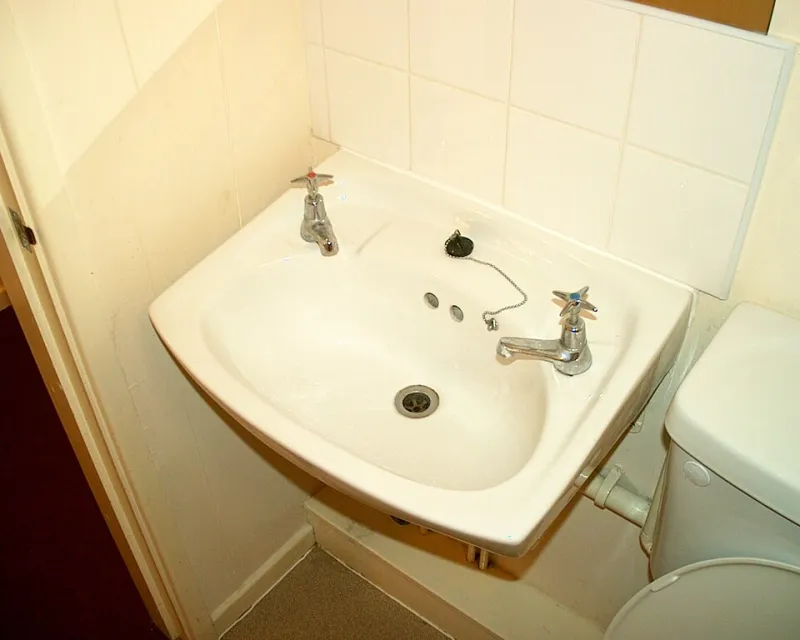
Photo: Trosmisiek, CC BY-SA 4.0, via Wikimedia Commons
Britain is often described as a hard-water country, but the phrase hides a more useful truth: the water in a Glasgow flat, a Bristol terrace and a Manchester new-build can behave very differently at the basin. Calcium and magnesium ions, bicarbonate levels and the age of local pipework all influence how a cleanser lathers, rinses and, crucially, what it leaves behind. For readers in southern and eastern England, where hardness is often more pronounced, the effect is familiar: a squeaky finish that feels clean for about ten minutes and tight for the rest of the morning. In softer-water areas, the same cleanser may feel plush and compliant. Neither experience is imaginary. The formulation is meeting a different mineral load.
In 2026, cleanser shelves are more sophisticated than ever, but sophistication is not the same as suitability. A formula designed for soft water and a gentle rinse may disappoint in a hard-water postcode, while a more robust surfactant system can feel stripping where water is soft. The answer is not to buy a new cleanser every month. It is to read the signals, understand the local water and recalibrate the rinse-off routine accordingly.
Why British Water Is Not One Water
Water hardness is usually expressed as calcium carbonate per litre. The higher the figure, the more dissolved minerals the water carries. Hardness is not a single national setting. It varies by region, by supplier and sometimes by supply zone within the same city. A postcode check with your water company is more useful than a broad national map, particularly if you have recently moved or noticed a change in how your bathroom fittings behave.
Hard water is also not the only variable. Water pressure, temperature and the condition of domestic pipes affect rinsing. A powerful shower can make a mediocre cleanser seem better; a low-pressure mixer tap can leave residue behind even when the formula is sound. This is why a cleanser that works on holiday in Cornwall may feel different at home in Hertfordshire.
What Hard Water Does to a Cleanser
Hard water does not simply fail to rinse soap away. Calcium and magnesium ions can interact with certain surfactants, especially traditional soaps, forming insoluble salts that cling to skin and basin alike. That is the film often described as soap scum. Modern syndets are less prone to this reaction, but they are not immune. Some anionic surfactants are more sensitive to calcium than others, and a formula can lather poorly or leave a slippery residue when the mineral load is high.
The sensation of tightness is not a reliable sign of cleanliness. It can reflect an alkaline cleanser, a long contact time, hot water or a surfactant system that has disrupted the skin barrier. In hard-water areas, the effect may be compounded by residue that encourages repeated cleansing, which in turn increases the chance of irritation. Skin that feels unexpectedly reactive after cleansing is often responding to this cycle rather than to a single ingredient.
Four Formulation Signals Worth Reading
pH
Cosmetic labels rarely state pH, but brand technical pages sometimes do. A rinse-off cleanser around pH 5 to 6 is a sensible starting point for most faces. Very alkaline bars and gels can be useful for oily backs and scalps, but they are rarely the most comfortable choice for facial skin, especially when the water itself is already alkaline.
Surfactant system
Mild anionic surfactants such as sodium cocoyl isethionate, sulfosuccinates and glucosides tend to tolerate hard water better than traditional soap. Sodium tallowate and sodium palmate are the classic soap ingredients most likely to form lime soap in hard water. Sulfate-free is not a synonym for hard-water-proof, however; the whole surfactant blend matters more than one headline claim.
Chelating ingredients
EDTA and tetrasodium EDTA are the best-known chelators, but phytic acid, sodium phytate, gluconic acid and citric acid can also help. Their role is to bind calcium and magnesium so that surfactants can rinse away rather than precipitate. A cleanser does not need a long chelator list to be effective, but the presence of one in a hard-water formula is a useful signal.
Rinse-off texture
Texture is information. A cleanser that feels unusually slippery and takes three rinses to clear may be over-emulsified or poorly matched to hard water. A formula that rinses to a soft, non-squeaky finish is usually the better sign. Balms and milks can be excellent, but they need sufficient emulsifier to lift cleanly; if they leave a film, they are not doing their job in your water.
A Practical Recalibration for 2026
Start with the water, not the marketing. Check your supplier's hardness figure and note whether your bathroom has visible limescale. If it does, assume your cleanser is working harder than it would in a soft-water area.
Shorten contact time. A minute is usually enough for a rinse-off cleanser. Leave it on longer only if the product is specifically designed as a treatment cleanser, and even then, follow the instructions rather than assuming more time means more benefit.
Use a chelator if film persists. A cleanser with EDTA or phytate can make a noticeable difference, but so can a weekly chelating shampoo for hair and a well-formulated acidic toner for those who need it. Do not add three chelating products at once; change one variable and observe.
Adjust frequency, not just product. If your skin feels tight after every cleanse, reduce the morning cleanse to a lukewarm rinse or a micellar wipe-off for dry skin, and reserve a full cleanse for the evening when sunscreen and pollution need removing. Double cleansing should be a response to heavy makeup or high SPF, not a default.
Rinse with cooler water and use a clean flannel. Hot water increases lipid loss and makes residue more likely to feel uncomfortable. A flannel can help remove cleanser evenly, but it should be clean and used gently. The aim is a comfortable finish, not a polished one.
The Bottom Line
Hard water is a formulation stress test, not a moral failing. The right cleanser in 2026 is not the one with the most claims; it is the one that rinses cleanly in your postcode and leaves your skin comfortable before moisturiser. If your routine has started to feel tight, filmy or unpredictable, change the rinse-off step before you change everything else. In a country of varied water, a local recalibration is more useful than a universal rule.