Pixel Protection? What UK ‘Screen Defence’ Skincare Actually Formulates For

Photo: Auguste Rodin (France, 1840-1917), Public domain, via Wikimedia Commons
The phrase ‘blue light defence’ has settled into the UK skincare vocabulary with the confidence of a clinically proven benefit. It appears on mists, moisturisers, serums and setting sprays, often accompanied by a spectral graphic and a premium. The claim deserves scrutiny, not because blue light is fictitious, but because the distance between a genuine antioxidant formula and a marketing metaphor can be considerable. In 2026, the sensible question is not whether a product ‘blocks’ blue light but whether its formulation does anything meaningful for skin exposed to screens, daylight and the ordinary oxidative load of urban life.
What blue light actually is—and what screens deliver
Blue light is high-energy visible light, broadly in the 400–500 nanometre range. The sun is by far the dominant source. Screens emit a small fraction of that intensity, and the dose received at typical viewing distances is modest compared with even a short walk outdoors. Some laboratory work has linked high-energy visible light to oxidative stress and pigmentation, particularly in deeper skin tones, but the clinical relevance of screen-level exposure remains unresolved. That does not make screen-time skincare worthless; it makes the claim narrower than the packaging implies.
A moisturiser marketed as ‘blue light defence’ is rarely a screen shield in the way that a sunscreen is a UV shield. At best, it may supply antioxidants that help manage reactive oxygen species, or pigments that attenuate visible light reaching the skin. At worst, it is a hydrating base with a story attached. Neither outcome is a scandal, but the consumer should know which one they are buying.
The ingredients with a plausible mechanism
The strongest visible-light story belongs not to antioxidants but to iron oxides. Tinted products containing CI 77491, CI 77492 or CI 77493 can help attenuate visible light, including blue light, and are a reasonable consideration for those troubled by persistent pigmentation. This is why a tinted sunscreen with iron oxides is often more defensible than a clear ‘blue light’ serum. The pigment does not need to make a biological claim; it simply reduces the light reaching the skin.
Antioxidants occupy a different category. Vitamin C, vitamin E, ferulic acid, niacinamide, green tea catechins and related actives can support the skin’s own defence systems against oxidative stress. They do not ‘block’ blue light in any literal sense. Their value is adjunctive, and it depends on stability, concentration and packaging. A beautifully worded algae complex at the end of an ingredient list is not equivalent to a well-formulated antioxidant serum in opaque packaging.
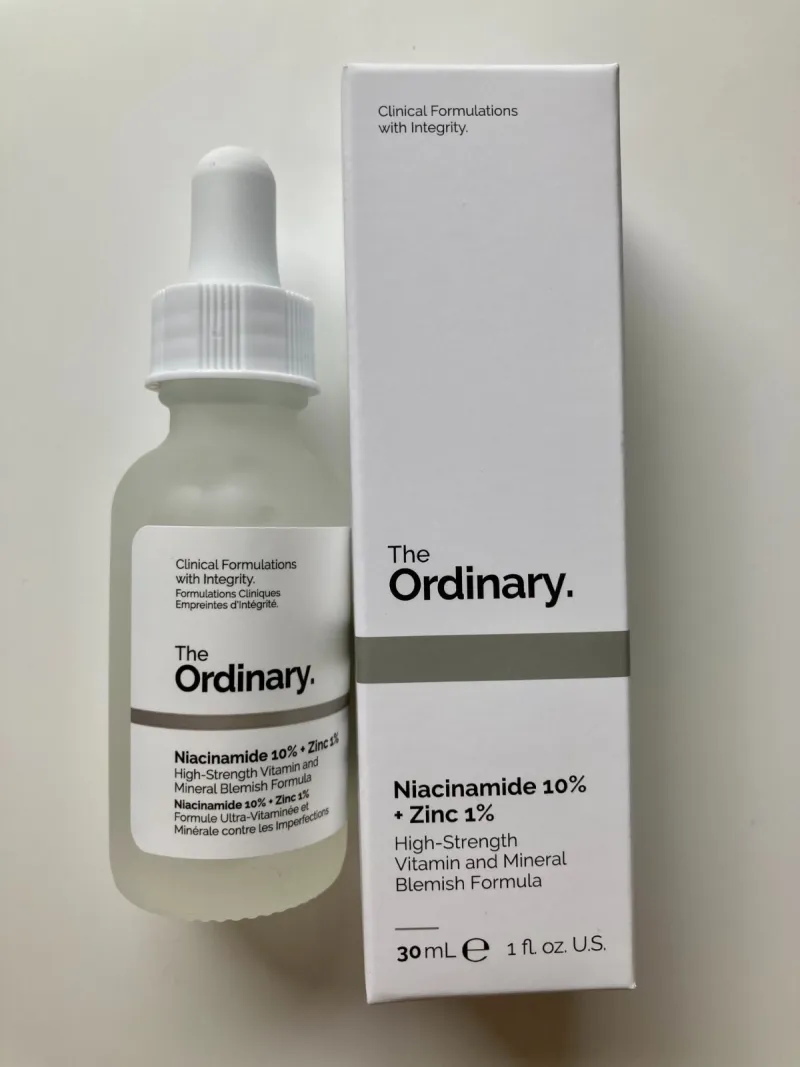
Niacinamide deserves a particular note because it is often recruited into screen-defence marketing. It has credible evidence for barrier support and the appearance of pigmentation, but it is not a blue-light filter. The same caution applies to prebiotic and ‘digital pollution’ complexes: the terminology may be permissible, but the proof should be visible in the substantiation, not merely in the campaign.
Reading the UK shelf without paying for a metaphor
Start with the ingredient list rather than the front of the pack. If visible-light protection is the goal, look for iron oxides and a stated broad-spectrum SPF. If antioxidant support is the goal, look for a配方 with a credible active near the front and packaging that protects it from light and air. If the product is a mist, ask how long it remains on the skin and whether it can reasonably replace a sunscreen. Usually, it cannot.
UK cosmetic claims are subject to substantiation requirements, and the Advertising Standards Authority has long taken an interest in implied efficacy. A brand that states a specific percentage of blue light ‘blocked’ should be able to explain the test method, the wavelength range and the relevance to real-world exposure. A brand that simply says ‘defends against blue light’ is making a softer claim, but it is still a claim. Shoppers are entitled to ask what mechanism is doing the work.
Price is a poor proxy for evidence. A tinted SPF at a moderate price may offer more visible-light attenuation than a luxury serum with a spectral graphic. A fragrance-free antioxidant serum may be more useful than a ‘screen defence’ moisturiser that contains little beyond glycerin and a story. The audit should be by formula, not by adjective.
A practical three-tier audit
First, the credible tier: a tinted broad-spectrum sunscreen with iron oxides, worn as part of a daily routine. This is the most straightforward way to address visible light if pigmentation is a concern. Second, the supportive tier: a stable antioxidant serum used beneath sunscreen. It may help with oxidative load, but it should not be sold as a screen shield. Third, the low-priority tier: a ‘blue light’ mist or moisturiser with no meaningful filters and no clearly stabilised antioxidant system. It may be pleasant, but it should not command a premium on the strength of its screen-defence language.
For UK readers, the practical routine remains unglamorous: broad-spectrum SPF daily, antioxidant support if tolerated, and a tinted formula where visible-light protection is specifically wanted. The screen is part of the environment, but it is not the sun. A product that acknowledges that distinction is more useful than one that blurs it.
The bottom line
‘Blue light defence’ is not a single technology, and it is not a substitute for sunscreen. It can describe a tinted formula with iron oxides, an antioxidant serum with a plausible mechanism, or a moisturiser with a marketing department working overtime. The label is a prompt to inspect the formula, not a conclusion. In 2026, the UK shopper’s best defence against dim claims is a clear question: what in this product is actually doing the work, and is that work relevant to the light my skin truly receives?