Cold Comfort: What Refrigeration Really Does to a UK Skincare Formula in 2026
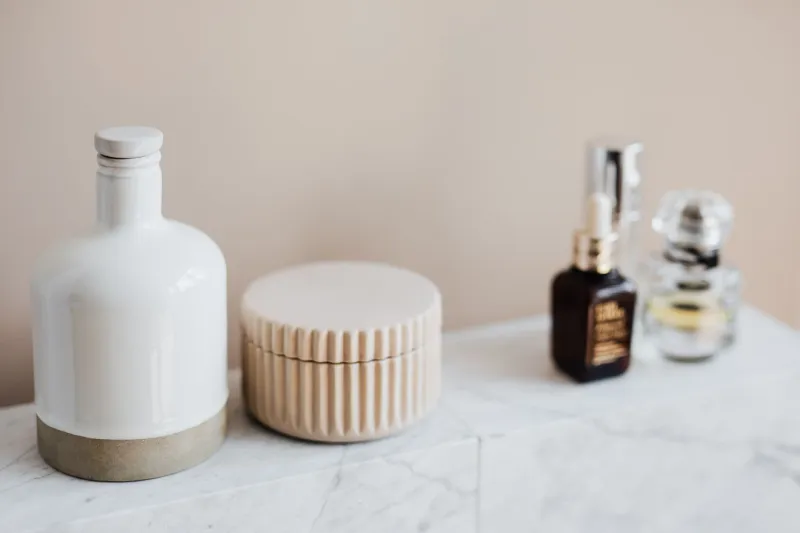
The beauty fridge has drifted from novelty to fixture. It appears in bathroom corners, on dressing tables and beside beds, often stocked with more hope than logic. Cold is not a neutral backdrop to a formula. It alters viscosity, solubility, emulsion structure and the rate at which oxidation takes place. It can also introduce water where water was not intended, particularly when a chilled bottle is opened in a warm, steam-filled British bathroom. The useful question is therefore not whether a mini-fridge looks considered. It is whether a given formula has been designed to tolerate cold storage, and whether the conditions inside that fridge are stable enough to justify the intervention.
Begin with the storage instruction, not the trend
Labels carry more information than many shoppers extract from them. Phrases such as store below 25°C, protect from sunlight, keep in a cool dry place and do not refrigerate are formulation cues rather than decorative small print. A product marked do not refrigerate is usually an emulsion whose sensory properties, crystalline structure or preservative balance has been calibrated for room temperature. Chilling it may thicken the texture, cause separation or encourage water to condense on the surface once the container is opened.
A kitchen refrigerator typically runs at around 4°C, while a dedicated cosmetic mini-fridge may sit nearer 10°C to 15°C. Those are different environments. The door shelf of a kitchen fridge is also a poor home for skincare because it experiences repeated temperature swings each time the door is opened. A cosmetic fridge that is constantly unplugged, moved or overfilled offers little advantage either. Stable, moderate cooling is more defensible than dramatic cold.
Which formulas genuinely benefit from chilling?
The clearest candidate is an opened water-based vitamin C serum built around L-ascorbic acid. This ingredient is vulnerable to oxidation, and lower temperatures slow the chemical reactions that lead to colour shift and loss of potency. The benefit is real only when the formula is already protected by opaque, airless packaging and when the label permits cool storage. A clear dropper bottle left on a sunny windowsill will not be rescued by refrigeration. Nor does every vitamin C derivative require cold storage; many are formulated for ordinary shelf life and do not need the extra step.
Certain gel textures can feel more pleasant when chilled, especially during a warm spell or after exposure to central heating. That is a sensory benefit, not a preservation strategy. Some retinoid products may be stored cool if the packaging explicitly allows it, but cold storage should never be used to extend the life of a product that has already been open for longer than its recommended period. Anhydrous oils, balms and cleansing ointments gain nothing from refrigeration. They may harden, become difficult to dispense and attract condensation when returned to a warm room.
Sunscreens and standard moisturisers are usually best left in a cool, dark cupboard. Chilling does not improve sun protection, and repeated movement between a cold fridge and a warm bathroom can destabilise an emulsion. Cleansers and body products are similarly poor candidates. The fridge is not a substitute for correct packaging, sensible hygiene or a realistic use-by date.
The preservative question
Cold slows microbial growth, but it does not sterilise a product. This distinction matters. A preservative system is tested against a defined storage regime and a defined challenge. Moving a cream into a cold, humid environment and then opening it repeatedly can expose the surface to condensation and airborne microbes. Water on the rim of a jar is not harmless decoration. It is a route for contamination, particularly when fingers or unwashed tools are introduced.
Products in jars are therefore the least suitable candidates for a beauty fridge. Airless pumps, tubes and closed dropper bottles are more defensible because the formulation is exposed only at the point of use. Even then, the container should be closed immediately and wiped dry if condensation appears. A chilled product should not be left open on a bathroom shelf while the room fills with steam. The preservative system has enough work to do without being asked to compensate for avoidable water contact.
The British bathroom problem
From October onwards, many UK homes move between a cool bedroom and a warm, humid bathroom. Central heating dries the air in one room and raises the temperature in another. A towel rail can turn a small bathroom into a warm, damp pocket. A fridge placed in that room has to work harder, and every opening exposes cold packaging to moist air. The result is condensation on the bottle, the cap and the shelf beneath it.
If a formula does not explicitly need cold storage, a dark cupboard away from the radiator, the window and the shower is usually the more stable choice. If a product is kept chilled, the fridge should be dedicated to cosmetics rather than shared with food, cleaned regularly and kept at a steady temperature. It should not be packed so tightly that air cannot circulate. The product should live away from the door, where temperature fluctuates most. A simple thermometer is more useful than a decorative label.
A practical verdict
Chilling is useful when a product has a credible reason to be chilled: an opened L-ascorbic acid serum in protective packaging, a formula whose label explicitly permits refrigeration, or a gel texture where cool application is the point. It is largely theatre for cleansers, oils, balms, standard moisturisers and sunscreens. It is actively unwise for jars, unstable emulsions, products marked do not refrigerate and anything that will be moved repeatedly between cold and warm conditions.
The beauty fridge is not a personality. It is a storage tool with a narrow brief. In a UK climate of hard water, steam and long central-heating seasons, the more valuable habits are still the unglamorous ones: read the storage instruction, keep the container closed, avoid condensation, respect the use-by date and do not ask cold air to fix a formula that was never designed for it. Chilled skincare can be pleasant and, in a few cases, genuinely protective. It cannot make a poorly chosen product better.