The Buffer Beneath the Foam: Auditing Cleanser pH in British Bathrooms
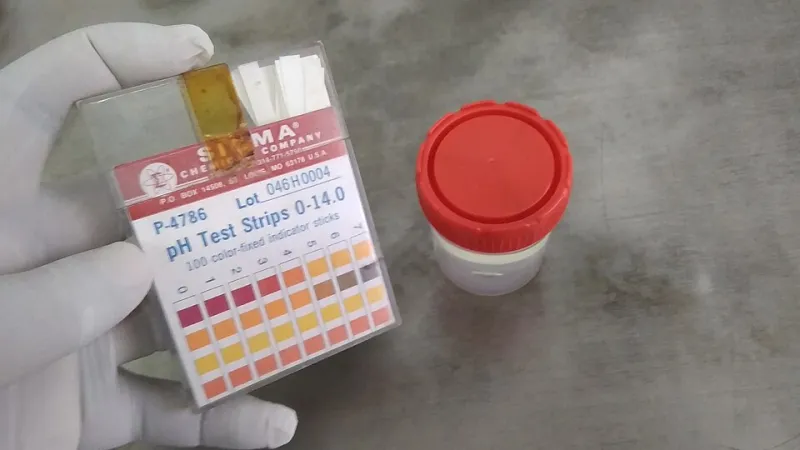
Photo: Ajay Kumar Chaurasiya, CC BY-SA 4.0, via Wikimedia Commons
The phrase ‘pH-balanced’ has become a fixture of UK cleanser packaging, sitting comfortably alongside ‘gentle’, ‘dermatologically tested’ and ‘suitable for sensitive skin’. It sounds precise. It is not. A pH claim without a figure, a buffer system and a context for use is less a specification than a mood. The useful question for 2026 is not whether a cleanser is pH-balanced, but what pH it actually delivers on the skin, for how long, and whether the surfactant blend behind that number is mild enough to justify the label.
What the Claim Leaves Out
Skin’s acid mantle sits somewhere around pH 4.7 to 5.5 on most of the face, with natural variation across body sites and between individuals. A cleanser described as pH-balanced is usually making an implicit comparison with that range, but the comparison is rarely stated. Balanced relative to what? Tap water? The product’s own concentrate? The pH after dilution in a wet palm? These distinctions matter because a cleanser is not applied neat and left in place. It is diluted, agitated, rinsed and followed by whatever comes next.
The more meaningful label would read something like ‘pH 5.5 in a 10% aqueous dilution, buffered with citric acid and sodium citrate, formulated with mild amphoteric and nonionic surfactants’. That is not a slogan. It is a formulation brief. Most UK shelves do not offer it, which is why an ingredient-led reading is more useful than the front-of-pack claim.
Surfactants, Buffers and the Number That Reaches Skin
Cleanser pH is shaped by two main forces: the surfactants themselves and the buffering system around them. Traditional soap, whether in bar or liquid form, is alkaline by nature, often sitting around pH 9 to 10. Syndet bars and mild liquid cleansers can be formulated closer to skin pH, but ‘can be’ is doing considerable work in that sentence. An anionic surfactant such as sodium lauryl sulfate may be formulated at pH 5.5, yet still prove more stripping than a gentler amphoteric blend at a similar pH. The number is not the whole story; it is one coordinate on a map.
Buffering systems are equally under-discussed. Citric acid is common, but citric acid alone is not a buffer. It needs a counter-ion, such as sodium citrate, to resist pH drift when the formula is diluted or when it meets the minerals in tap water. A cleanser that reads pH 5.5 in the bottle may shift once it is mixed with water in the hand, particularly if the buffer capacity is low. This is not a scandal; it is ordinary formulation chemistry. It does mean that a single label figure, where one exists, should be read as a starting point rather than a guarantee.
The Water Variable in Hard-Water Britain
UK water hardness varies considerably, from soft supplies in parts of Scotland and the north-west to notably hard water across much of the south-east and London. Hard water contains calcium and magnesium ions that can interact with surfactants, reducing lather and, in the case of soap-based products, forming insoluble scum. This does not necessarily change the pH of the cleanser in a simple, predictable way, but it can change how much product is needed, how long it takes to rinse and how the skin feels afterwards.
A cleanser that performs comfortably in a soft-water area may feel tighter and less rinsed in a hard-water postcode, even if its measured pH is identical. That is one reason why a pH reading alone cannot settle the question of mildness. The water is part of the formula in real use, and in Britain it is a variable worth acknowledging.
A Cautious At-Home Strip Method
For readers who want to compare products rather than accept the claim, narrow-range pH strips can be useful, provided the method is consistent and the results are not overinterpreted. Broad-range litmus paper is not adequate; it will not distinguish meaningfully between pH 5 and pH 6. Look for strips with a narrow range, ideally covering pH 4 to 7, and follow the manufacturer’s reading time.
A practical approach is to make a simple dilution with distilled or deionised water, not tap water, to reduce the mineral variable. Use a consistent ratio, such as one part cleanser to nine parts water, stir gently and test the liquid within the stated reading window. Record the result for each product using the same method, and repeat once to check for obvious inconsistency. Do not test strips directly on the skin, and do not treat the outcome as a laboratory measurement. Surfactants, preservatives and viscosity modifiers can all affect the colour change, and a strip is not a pH meter.
The value of this exercise is relative, not absolute. If one cleanser reads consistently higher than another under the same conditions, that is a useful signal. If a product sits at pH 5.5 but leaves the skin feeling tight, the pH is not the only variable that matters.
Reading the Results Without Overreading
A cleanser’s pH should be considered alongside its surfactant system, its rinse-off behaviour and its full ingredient list. A mildly acidic product built on harsh surfactants is not automatically gentler than a slightly higher-pH product built on mild ones. Likewise, a low pH does not compensate for a formula that is difficult to rinse or heavily fragranced, though fragrance-free products remain the safer starting point for reactive skin.
It is also worth remembering that pH can drift over a product’s shelf life, particularly if it is stored in a warm bathroom or exposed to air and water during use. A figure printed at launch is not necessarily the figure in the final weeks of the bottle. This is not a reason to distrust every cleanser; it is a reason to treat ‘pH-balanced’ as a claim to be audited rather than a conclusion to be accepted.
The Shelf Verdict
In 2026, the UK cleanser shelf is better than it was, with more brands willing to publish pH ranges and more consumers asking for them. But the phrase ‘pH-balanced’ still does too much work for too little evidence. A sensible buying approach is to prioritise mild surfactant blends, look for a stated pH and buffer system where available, and judge the product by how the skin feels after rinsing rather than by the front of the bottle alone. The strip test can be a useful comparison tool, but it is a starting question, not a verdict. The buffer beneath the foam is where the real answer sits.